
















Best Virtual Cards for Africans in 2026: Pay Online Anywhere Without Restrictions
Looking for the best virtual cards in Africa? Discover the top virtual dollar cards for Africans in 2026 to pay for subscriptions, online shopping, Facebook ads, Google services, and international transactions from anywhere.

Best Virtual Cards for Africans in 2026: Pay Online Anywhere in the World
Updated: June 2026 | Reading time: ~8 minutes
You have money in your account. You go to checkout. Your card gets declined.
If you live in Nigeria, Ghana, Kenya, Uganda, Tanzania, or anywhere else in Africa, this is not an unfamiliar frustration. Local debit cards are routinely blocked by international merchants, rejected by global subscription platforms, and flagged by payment processors that still treat African-issued cards with suspicion. The result: millions of Africans with perfectly good money are locked out of the global digital economy.
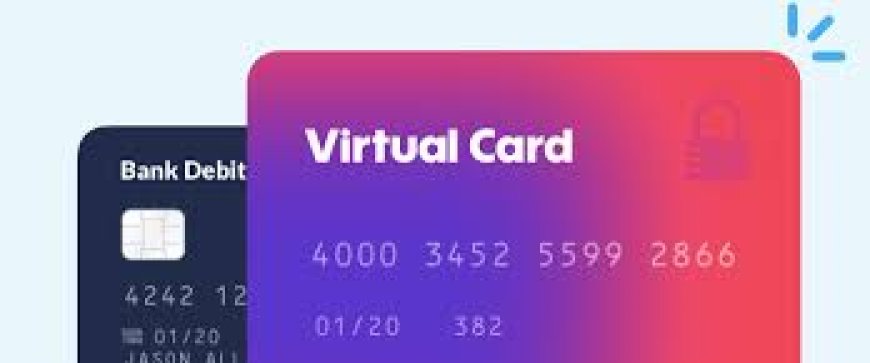
Virtual dollar cards have changed that. In 2026, a growing ecosystem of African-built and Africa-focused fintechs now lets you create a USD (and sometimes EUR or GBP) virtual card in minutes, fund it from your local currency, and use it to pay on Amazon, Netflix, Spotify, ChatGPT, Google Ads, Shopify, AWS, and virtually any international platform that accepts Visa or Mastercard.
This guide covers the best virtual cards for Africans in 2026 who each card is built for, what it actually costs, and which one you should use based on your situation.
Why African Cards Get Declined (And Why Virtual Cards Fix It)
The core problem is not your bank balance. It is your card's BIN the Bank Identification Number that identifies the issuing institution. Merchants and payment processors use BIN data to assess fraud risk, and many have historically blocked or flagged BINs from African banks entirely, regardless of the cardholder's actual financial position.
Virtual dollar cards solve this by issuing you a card with a US, UK, or European BIN tied to a dollar balance you control that international merchants accept without friction. The virtual card market is projected to grow from $415 billion in 2023 to $2.4 trillion by 2032, driven largely by the shift toward mobile wallets and the rise of digital economies in emerging markets.
The setup process across most providers follows the same basic flow: download the app, complete KYC verification with your national ID, fund your wallet in local currency (which is converted to USD), and receive a 16-digit virtual Mastercard or Visa with an expiry date and CVV ready to use at any checkout in the world.
Quick Comparison: Best Virtual Cards for Africans in 2026
|
Provider |
Card Fee |
Monthly Fee |
Transaction Fee |
Best For |
Apple/Google Pay |
|
Grey |
$5 |
None |
Varies by method |
Freelancers, multi-currency |
Yes (new in 2026) |
|
Chipper Cash |
$3 |
$1 |
$0.90/txn |
West Africa users, crypto |
No |
|
Geegpay (Raenest) |
$3 |
None |
$0.50/txn |
Freelancers, high limits |
No |
|
Eversend |
$3 |
None |
Low flat fee |
Pan-African users |
No |
|
Barter by Flutterwave |
Free |
$1 |
Included in FX |
Existing Flutterwave users |
No |
|
Payday |
Free |
None |
FX margin |
Nigeria/Ghana salaried workers |
No |
|
Kuda |
Free |
None |
FX margin |
Existing Kuda bank users |
No |
Fees change frequently always verify in-app before committing.
1. Grey — Best Overall for Freelancers and Remote Workers
What Is Grey?
Grey (formerly Aboki Africa) is a Y Combinator-backed cross-border payments platform serving over 2 million users, built specifically for African freelancers, remote workers, and digital entrepreneurs who earn and spend internationally. It is one of the most comprehensive virtual card solutions available to Africans in 2026.
Grey's core offer is a multi-currency account that gives you real USD, GBP, and EUR virtual bank accounts not just wallets with actual routing numbers and account details that you can share with clients, platforms like Upwork, Fiverr, Stripe, Payoneer, Deel, and Amazon KDP, and international employers. Once funds arrive, you can hold them in their original currency, convert at competitive rates, or spend directly via the Grey virtual card.
Grey's 2026 Upgrade: Apple Pay and Google Pay
In January 2026, Grey launched a major upgrade: Apple Pay and Google Pay support for its virtual cards, enabling users to tap their phones and pay at any of 150 million merchants worldwide without converting funds or loading a separate card balance. This makes Grey the only Africa-focused virtual card provider to offer contactless payment integration at this scale.
The upgraded card also includes 3D Secure protection every transaction requires your in-app approval before it processes and the ability to create multiple cards for different purposes, such as separating business expenses from personal subscriptions.
Grey: Key Features
Grey currently supports USD transfers to over 170 countries, with multi-currency wallets in USD, EUR, and GBP, and local-currency payouts in 17 currencies. The card is accepted globally for online shopping, international subscriptions, advertising spend (Google Ads, Meta Ads), SaaS tools, and e-commerce purchases. Grey also includes a built-in invoicing feature that lets freelancers send professional invoices directly from the app. The platform is regulated by FinCEN (US) and FINTRAC (Canada).
Grey: Fees
Getting the upgraded Grey virtual card costs $5. There is no monthly maintenance fee. Deposit fees vary by method: 1% for USD and EUR deposits. Withdrawals to local bank accounts and mobile money wallets attract fees that vary by currency. The card spending itself is free for USD transactions you spend directly from your balance.
Grey: Best For
Grey is the top choice if you are a freelancer, remote worker, or digital nomad who earns in foreign currencies and needs both a reliable way to receive international payments and a card that works globally without friction. The Apple Pay and Google Pay integration makes it uniquely useful for Africans living or traveling abroad who need contactless payment capability.
Grey: Watch Out For
Grey's fee structure, while generally competitive, can be slightly less straightforward than flat-fee providers for some corridors. The card experience, while improved in 2026, was historically secondary to Grey's strength in foreign account management. Card availability may vary by country
2. Chipper Cash — Best for West Africans Who Want Everything in One App
What Is Chipper Cash's Virtual Card?
Chipper Cash launched its Visa USD virtual card in Nigeria in partnership with Visa and later expanded with Bridge and Stripe infrastructure, making it one of the most established virtual card products on the continent. The card is 3D-secured and works on Spotify, Netflix, Apple, Google, AliExpress, Amazon, and most major international platforms.
The Chipper Cash virtual card is deeply integrated into the broader Chipper ecosystem, which includes peer-to-peer transfers across Nigeria, Ghana, Uganda, and Rwanda, cryptocurrency (Bitcoin) trading, and stock investing. This means you can fund your virtual card from your Naira wallet, your dollar balance, or even your crypto holdings all within a single app.
Chipper Cash: Fees
Creating a Chipper Cash virtual card costs $3, with a $1 monthly maintenance fee charged on the 28th of every month while the card is active. There is also a $0.90 flat fee per transaction. Funding the card is straightforward through the app's USD Card section. Spending limits stand at $2,500 per day and $10,000 per month.
Chipper Cash: Best For
Chipper Cash's virtual card is the ideal pick if you are already using Chipper Cash for cross-border transfers to Nigeria, Ghana, Uganda, or Rwanda and want a dollar card without signing up for another platform. It is also a solid option for students and light users who make occasional international purchases the $3 creation fee is among the lowest on the market. Nigeria and Uganda are its strongest markets.
Chipper Cash: Watch Out For
The $1 monthly maintenance fee adds up to $12 annually, which makes it less economical than no-monthly-fee competitors for low-frequency users. Some users report occasional declines on certain merchants. The spending limit of $10,000/month may also be restrictive for high-volume business use.
3. Geegpay (Raenest) — Best for High-Volume Freelancers and Businesses
What Is Geegpay?
Geegpay is the consumer-facing brand of Raenest, a digital finance platform built for Africa's gig economy. It is designed specifically for freelancers, creators, and remote workers who need to receive large international payments and spend them globally with minimal friction.
Geegpay's standout feature is its spending limit: verified users at the highest KYC tier can spend up to $20,000 per day and $60,000 per month numbers that dwarf most competitors and make it genuinely useful for business owners, digital marketers, and agency operators running significant ad budgets or SaaS subscriptions.
Like Grey, Geegpay offers multi-currency virtual accounts in USD, EUR, and GBP that function as real bank accounts for receiving client payments. The platform lets you create and manage rules for your virtual cards, set spending limits, restrict which merchant categories can charge your card, and freeze or terminate cards instantly giving users unusually granular control over their spending.
Geegpay: Fees
Card creation costs $3. There is no monthly maintenance fee. Each transaction incurs a $0.50 fee. Funding from your wallet is free. For deposits, Geegpay now offers 4 free monthly ACH and stablecoin deposits in 2026, with subsequent ACH transactions at $1 flat. USD deposit fees are 0.8%, capped at $15. NGN withdrawals to Nigerian bank accounts are free.
Geegpay: Best For
Geegpay is the strongest choice for high-volume freelancers and small business owners who process significant monthly spend on international platforms and need the flexibility of high spending limits with tight spending controls. It is particularly popular among digital marketers running large Google Ads or Meta Ads campaigns, agencies paying for multiple SaaS subscriptions, and remote workers earning $1,000 or more monthly from international clients.
Geegpay: Watch Out For
Geegpay is primarily Nigeria-focused, though it has expanded across Africa. The platform is strongest for users already within the Raenest ecosystem. Customer support response times can be inconsistent during peak periods.
4. Eversend — Best Pan-African Virtual Card
What Is Eversend?
Eversend is a Uganda-founded, pan-African fintech that offers a multi-currency wallet and virtual dollar card covering users across Nigeria, Ghana, Kenya, Uganda, Rwanda, and more. It stands out for its geographic breadth one of the widest of any Africa-built virtual card provider.
The Eversend virtual card charges a one-time $3 creation fee with no monthly maintenance costs, making it one of the most economical options for users who want a card they can activate and use without worrying about monthly charges eating into their balance during quiet months. The card works globally on Visa-accepting platforms.
Eversend: Best For
Eversend is the best pick for East and Central African users who want a virtual dollar card with no monthly fees. It is also a strong option for users who want a single platform to handle both cross-border transfers within Africa and international online payments.
5. Barter by Flutterwave — Most Recognizable Brand
What Is Barter?
Barter by Flutterwave was one of the first virtual dollar cards in Nigeria and carries the brand recognition of Flutterwave, one of Africa's most well-known payment infrastructure companies. The card itself is free to create but charges a $1 monthly fee which some users find adds up unnecessarily. There have been user reports of cards being shut down without notice, and reliability has been inconsistent compared to newer entrants.
Barter: Best For
Barter works best for users already embedded in the Flutterwave ecosystem who want the convenience of a familiar brand. It is not the first recommendation for new users given the reliability concerns and $1 monthly fee.
Head-to-Head: Which Virtual Card Wins by Use Case?
Best for Freelancers Receiving International Payments
Winner: Grey
Grey's combination of real USD/GBP/EUR virtual bank accounts, competitive conversion rates, invoicing tools, Apple Pay/Google Pay integration, and a 2-million-strong user base makes it the most complete solution for African freelancers in 2026. If your priority is receiving money from Upwork, Fiverr, Stripe, or Payoneer and spending it globally, Grey is the platform.
Best for High-Volume Business Spending
Winner: Geegpay (Raenest)
$60,000/month in spending limits, granular merchant controls, and 4 free monthly deposits in 2026 make Geegpay unmatched for businesses, agency owners, and digital marketers who move serious money through their virtual cards.
Best for Occasional or Light Use
Winner: Chipper Cash or Eversend
For students, casual online shoppers, or anyone who uses a virtual card a few times a month, Chipper Cash's $3 creation fee gives easy entry (though the $1 monthly fee adds up), while Eversend's no-monthly-fee structure is better for low-frequency users.
Best for Contactless and In-Person Payments
Winner: Grey
Apple Pay and Google Pay support launched in January 2026 makes Grey the only African-born virtual card that functions as a true tap-to-pay solution at physical merchants globally a critical advantage for Africans living abroad or traveling internationally.
Best for East and Pan-African Users
Winner: Eversend
Eversend's coverage of Uganda, Kenya, Rwanda, and other East African markets, paired with its no-monthly-fee structure, makes it the strongest pan-African option for users outside Nigeria and Ghana.
Best for Crypto Users
Winner: Chipper Cash
If you hold Bitcoin or other crypto and want to convert and spend via a dollar card within a single app, Chipper Cash is the only major African virtual card provider that natively integrates crypto trading with virtual card spending.
What to Look for When Choosing a Virtual Card in Africa
1. Acceptance Rate: The most important metric is whether the card actually works at checkout. Cards with US or European BINs from established Visa/Mastercard networks have the highest acceptance rates. Grey, Geegpay, and Chipper Cash all score well here.
2. Total Cost of Ownership: Don't just look at the creation fee. A $0 creation fee with a $1 monthly fee costs $12/year before any transactions. Calculate your expected monthly spend and compare the full fee picture.
3. Spending Limits: If you run ad campaigns or pay large invoices, ensure your card's daily and monthly limits can handle your volume. Geegpay's $60,000/month ceiling is industry-leading for African-issued virtual cards.
4. Multi-Currency Support: If you earn in GBP or EUR in addition to USD, a platform like Grey that lets you hold and spend multiple currencies without forced conversion saves money in the long run.
5. Funding Flexibility: Check whether you can fund from your local bank, mobile money wallet, or crypto. The easier the funding process, the more useful the card in practice.
6. Security Controls: Look for 3D Secure (3DS) protection, the ability to freeze cards instantly, and merchant-category restrictions. Grey and Geegpay both offer strong controls.
The Bottom Line: Best Virtual Cards for Africans in 2026
The virtual card space in Africa has matured dramatically. The days of hoping your local naira, cedi, or shilling card would get through at checkout are over if you're using the right platform. Here is the summary:
Choose Grey if you are a freelancer or remote worker who earns in foreign currencies and wants the most complete platform: real foreign bank accounts, a virtual card with Apple Pay and Google Pay, and competitive conversion rates.
Choose Geegpay if you are a business owner, digital marketer, or high-volume spender who needs maximum spending limits and detailed card controls.
Choose Chipper Cash if you are already on the Chipper platform for West African transfers and want a convenient card with crypto integration in a single app.
Choose Eversend if you are in East or Central Africa and want a no-monthly-fee card with pan-African coverage.
The best card is ultimately the one that does not decline when you need it. Download two or three of these apps, create cards on each, and use the one that works best for your specific spending patterns. In 2026, Africans have more reliable, affordable, and globally accepted virtual card options than at any point in history and the gap with the rest of the world is closing fast.
Fees, spending limits, and features are subject to change. Always verify current terms directly within each app before making financial decisions. This article is for informational purposes only and does not constitute financial advice.
Recommended posts
Chipper Cash vs LemFi vs NALA: Which Is the Best African Money Transfer App in 2026?
Grey Finance vs Geegpay vs Cleva: Best Dollar Account for African Freelancers in 2026
MTN MoMo vs Airtel Money vs M-Pesa: Best Mobile Wallet in Africa for 2026
Top 7 Legit Microtask Sites to Earn $5–$50 Daily in Africa 2026: No Experience Needed
Top 10 Best Paying Survey Apps in Africa for 2026 (Instant Mobile Money Payouts)
What's Your Reaction?