
















Best Ways to Receive International Payments in Africa (2026 Guide for Freelancers & Businesses)
Discover the best ways to receive international payments in Africa in 2026. Compare Payoneer, Wise, Grey, Geegpay, bank transfers, mobile money, and other trusted payment solutions for freelancers, remote workers, online sellers, and businesses.


Best Ways to Receive International Payments in Africa (2026 Guide)
The fastest, cheapest ways for Africans to receive international payments in 2026 are multi-currency platforms like Wise and Grey for freelancers and remote workers, Payoneer for marketplace earners on Upwork and Fiverr, mobile money (M-Pesa, MTN MoMo, Airtel Money) for smaller remittances, and direct domiciliary bank transfers or virtual dollar accounts for businesses handling larger international invoices. PayPal now works for receiving in most African countries, but withdrawal routes still vary by market, so it's best paired with a local workaround like a virtual dollar account.
If you're a freelancer in Lagos, a remote employee in Nairobi, or a small business owner in Accra, getting paid by a client abroad shouldn't feel like a second job. Yet for years, African earners have lost income to slow transfers, opaque exchange rates, and platforms that simply don't support their country. The good news: 2026 has brought more competition, lower fees, and more local integrations than at any point before. Below is a breakdown of every major method, who it's actually best for, and what to watch out for before you commit your income to it.
Why This Is Still Complicated in Africa
Three structural issues keep recurring across the continent: limited local currency corridors on major platforms, central bank rules (like Nigeria's CBN policies) that restrict certain USD flows, and high markup on currency conversion that quietly eats 3–5% of every payment. The platforms below solve these problems to different degrees, which is why most experienced freelancers and businesses end up using two or three tools rather than relying on one.
1. Wise (Multi-Currency Account)
Wise gives you local account details, account numbers, IBANs, or sort codes, in dozens of currencies, so a US or UK client can pay you as if you were a local recipient. Conversions happen at the mid-market rate with a transparent fee that typically runs between 0.33% and 2% depending on the currency pair, with no hidden markup added to the exchange rate.
Best for: Freelancers and businesses billing clients in GBP, EUR, or other widely supported currencies, and anyone who wants to hold multiple currencies before converting.
Watch out for: Wise's history in Nigeria has been rocky. USD transfers into Nigeria were suspended for several years and only naira payouts via GBP corridors have been reinstated, so Nigerians currently can't reliably receive USD directly into Wise. It works far more smoothly for users in Kenya, Ghana, Uganda, and South Africa, who can receive USD, GBP, and EUR and convert into local currency without restriction.
2. Payoneer
Payoneer remains the default choice for freelancers on Upwork, Fiverr, and Amazon because of how deeply it's integrated into those platforms. You get free local receiving accounts in USD, GBP, and EUR, and withdrawals land directly in your local bank account.
Typical costs: receiving payments usually carries a fee in the 1–2% range, and converting to local currency at withdrawal adds a further charge, with total costs often landing closer to 2% once conversion is included. Bank withdrawals generally take two to five business days depending on your country and bank.
Best for: Anyone earning primarily through marketplaces that already support Payoneer as a built-in payout method.
Watch out for: Payoneer's built-in exchange rate is usually below the open market rate, and annual account fees can apply if your account is inactive. Many freelancers now route Payoneer balances through a separate exchange service to capture a better local currency rate.
3. Virtual Dollar Accounts: Grey, Raenest, and Similar Platforms
A newer category built specifically for African earners gives you an instant USD, GBP, or EUR account number you can share with clients, marketplaces, or platforms like PayPal and Stripe. Grey and Raenest (formerly GeegPay) are the two most established names, both offering multi-currency wallets, competitive conversion rates, and virtual dollar cards for online spending.
These platforms are popular precisely because they fill the gap traditional domiciliary accounts leave open: opening one takes minutes, requires no branch visit, and supports receiving from freelance platforms, affiliate programs, AdSense, and direct client invoices. Fees are generally lower than legacy bank wires, though card creation and naira (or other local currency) withdrawal fees still apply.
Best for: Freelancers and creators who need a quick USD/GBP/EUR account to receive client payments and a virtual card for international subscriptions like Netflix, Apple, or AliExpress.
Watch out for: Because these are newer fintechs rather than traditional banks, it's worth using two of them in parallel (a common practice among experienced freelancers) in case one experiences downtime.
4. PayPal in Africa: What Actually Works in 2026
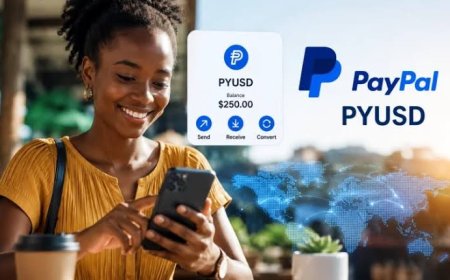
PayPal now supports receiving and using business tools in most African countries, including Nigeria, Kenya, South Africa, Ghana, and dozens of others. Where it gets tricky is withdrawal: PayPal has historically struggled to connect directly to local bank rails across the continent. In early 2026, PayPal announced a partnership with Nigerian fintech Paga, marking a real shift toward solving the withdrawal gap that had frustrated Nigerian freelancers for two decades, though full functionality is still rolling out market by market.
Best for: Receiving payments from clients or marketplaces that only support PayPal, especially in countries with more mature local withdrawal partnerships like Kenya and South Africa.
Watch out for: In markets where direct bank withdrawal still isn't smooth, the common workaround is linking a virtual dollar account (like Grey or Raenest) to your PayPal, receiving funds there, then withdrawing locally.
5. Flutterwave, Chipper Cash, LemFi, and NALA
This group of African-built fintechs has expanded rapidly to cover both peer-to-peer transfers and freelance-style USD receiving. Flutterwave's Send product lets freelancers create payment links and invoices that international clients can pay, with straightforward bank withdrawal across supported countries. Chipper Cash, originally built for cross-border P2P transfers within Africa, has expanded into receiving USD from abroad in select markets. LemFi and NALA focus more on remittances from the diaspora but increasingly support business and freelance use cases too.
Best for: Users who want an Africa-first platform with strong local bank integration and lower fees than legacy global players.
Watch out for: Feature availability still varies significantly by country, so confirm your specific market supports USD receiving before relying on it for client payments.
6. Mobile Money: M-Pesa, MTN MoMo, and Airtel Money
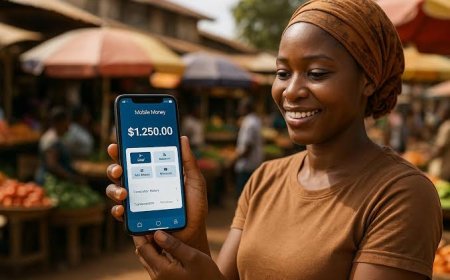
Mobile money has quietly become a genuine international payment rail, not just a domestic one. MTN MoMo has rolled out international remittance services that let recipients receive money directly into their mobile wallets using standard banking identifiers like IBAN, SWIFT, and routing numbers, with some markets seeing fees as low as a few cents on the local currency equivalent. MTN's MoMo Payment Service Bank in Nigeria has also partnered with global processors to let users receive funds in real time from major markets including the US, UK, and Canada. Meanwhile, M-Pesa and MTN Mobile Money have built interconnect agreements that let customers in Kenya, Tanzania, Uganda, and Rwanda send and receive across each other's networks.
Best for: Smaller, more frequent payments, family remittances, and anyone without easy access to a traditional bank account.
Watch out for: Mobile money is excellent for accessibility but isn't always the cheapest or fastest option for larger one-off payments like a $2,000 invoice; it shines for volume and convenience, not necessarily for minimizing FX loss on big transfers.
7. Direct Bank Transfer (Domiciliary Account / SWIFT Wire)
If you run a registered business or handle larger international invoices, a domiciliary (foreign currency) account at a local bank, or a standard SWIFT wire to your regular bank account, is still relevant. It's slower (often three to five business days) and SWIFT fees from sending banks can be $25–$50 per transfer, but it integrates cleanly with formal invoicing, accounting, and any client that insists on a traditional wire.
Best for: Registered businesses, larger B2B invoices, and clients who require formal bank wire documentation.
Watch out for: Opening a domiciliary account can involve paperwork and minimum balance requirements that don't make sense for occasional freelance income.
8. Stablecoins (USDC/USDT)
A growing number of platforms now let you receive payments as USDC or USDT and cash out to a bank account or mobile wallet, often within 24 hours. This bypasses some of the delays of traditional banking rails entirely.
Best for: Clients already comfortable paying in crypto, or freelancers who want to hold value in a dollar-pegged asset before converting.
Watch out for: Regulatory clarity around stablecoins differs by African country, so check local rules before making this your primary income channel.
Comparison at a Glance
|
Method |
Typical Fee |
Speed |
Best For |
|
Wise |
0.33%–2% |
Minutes–1 day |
GBP/EUR clients, multi-currency holding |
|
Payoneer |
~1–2% + conversion |
2–5 days to bank |
Upwork/Fiverr/Amazon earners |
|
Grey / Raenest |
Low flat fees + FX margin |
Instant–same day |
Quick USD/GBP/EUR account + virtual card |
|
PayPal |
Up to ~5% |
Instant in-app |
Marketplaces requiring PayPal |
|
Flutterwave / Chipper Cash |
Low, country-dependent |
Same day |
Africa-first freelancers and businesses |
|
Mobile Money (M-Pesa/MoMo) |
Very low |
Minutes |
Remittances, small frequent payments |
|
Bank Wire / Domiciliary |
$25–$50 flat (sender pays) |
3–5 days |
Registered businesses, large invoices |
|
Stablecoins |
Network fee only |
Minutes–hours |
Crypto-comfortable clients |
Country-by-Country Quick Notes
Nigeria: Payoneer and virtual dollar accounts (Grey, Raenest) are the most reliable; Wise USD receiving remains restricted, and PayPal withdrawal is improving through the new Paga partnership.
Kenya: M-Pesa's international remittance partnerships, Wise, and PayPal all function well, making Kenya one of the more flexible markets on this list.
Uganda and Tanzania: Mobile money interconnects (M-Pesa/MTN) plus Wise and Payoneer cover most freelance and remittance needs.
Ghana: MTN Mobile Money, Payoneer, and Flutterwave are the dominant combination for freelancers and small businesses.
South Africa: Wise, PayPal, and traditional bank wires all work smoothly, with fewer of the restrictions seen further north on the continent.
How to Choose: A Simple Decision Framework
- You're a marketplace freelancer (Upwork, Fiverr, Amazon): Start with Payoneer since it's built into the platform; add a virtual dollar account for better local conversion rates.
- You bill direct clients in GBP/EUR/USD: Use Wise (if your country supports USD receiving) or a virtual dollar account like Grey.
- You receive small, frequent payments or family remittances: Mobile money is faster and cheaper than anything requiring a bank.
- You run a registered business with formal invoices: Keep a domiciliary account or SWIFT-capable bank account for clients who need it, and a fintech option for everything else.
- A client only supports PayPal: Accept it, then move funds into a virtual dollar account or local bank as soon as possible to avoid PayPal's higher conversion costs.
Common Mistakes to Avoid
Relying on a single platform is the most common one; experienced earners typically run two payment methods in parallel so a temporary outage or country-specific restriction doesn't block their income. Ignoring the conversion rate is another costly habit, since the displayed transfer fee is often smaller than the hidden markup on the exchange rate. Finally, not confirming country-specific availability before invoicing a client, especially with Wise, PayPal, or mobile-money remittances, can delay a payment by days while you scramble for an alternative.
FAQ
What is the cheapest way to receive international payments in Africa? Mobile money and Wise tend to offer the lowest combined fee and FX markup for everyday amounts, while domiciliary bank wires make more sense for larger one-off business invoices despite the flat SWIFT fee.
Can Nigerians receive USD directly through PayPal? Direct bank withdrawal in USD remains limited, but the 2026 PayPal-Paga partnership is expanding local withdrawal options, and many freelancers route PayPal balances through a virtual dollar account in the meantime.
Is Payoneer or Wise better for African freelancers? Payoneer wins on marketplace integration (Upwork, Fiverr, Amazon), while Wise generally offers a better exchange rate where it's fully supported, particularly for GBP and EUR income outside Nigeria.
Can I receive international payments through mobile money like M-Pesa or MTN MoMo? Yes. Both networks now support direct international remittances using standard SWIFT, IBAN, or routing details, and interconnect agreements let users move money between M-Pesa and MTN Mobile Money across several East African countries.
Do virtual dollar accounts like Grey work for freelance platforms? Yes, they're designed for exactly this use case: receiving Upwork, Fiverr, Shopify, or direct client payments into a USD, GBP, or EUR account that can be withdrawn locally or spent via a virtual card.
Final Thoughts
There's no single best way to receive international payments in Africa, only the best combination for your specific income type, country, and clients. Marketplace freelancers should anchor around Payoneer, direct-client freelancers around Wise or a virtual dollar account, and anyone receiving remittances or smaller payments around mobile money. Layering two methods, rather than depending on one, is the most reliable way to keep your income moving regardless of which platform has a rough week.
Recommended posts
Best Virtual Cards for Africans in 2026: Pay Online Anywhere Without Restrictions
Chipper Cash vs LemFi vs NALA: Which Is the Best African Money Transfer App in 2026?
Grey Finance vs Geegpay vs Cleva: Best Dollar Account for African Freelancers in 2026
Top Companies Hiring Remote Workers in Africa in 2026 | Best Global Remote Jobs
What's Your Reaction?