


















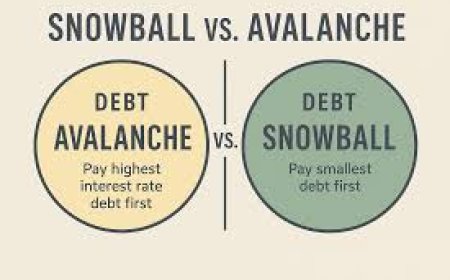




Debt Snowball vs Debt Avalanche: Which Payoff Method Works Best in 2026?
Compare the debt snowball vs debt avalanche method to find the best way to pay off debt in 2026. Learn the pros, cons, savings potential, and which strategy fits your financial goals.

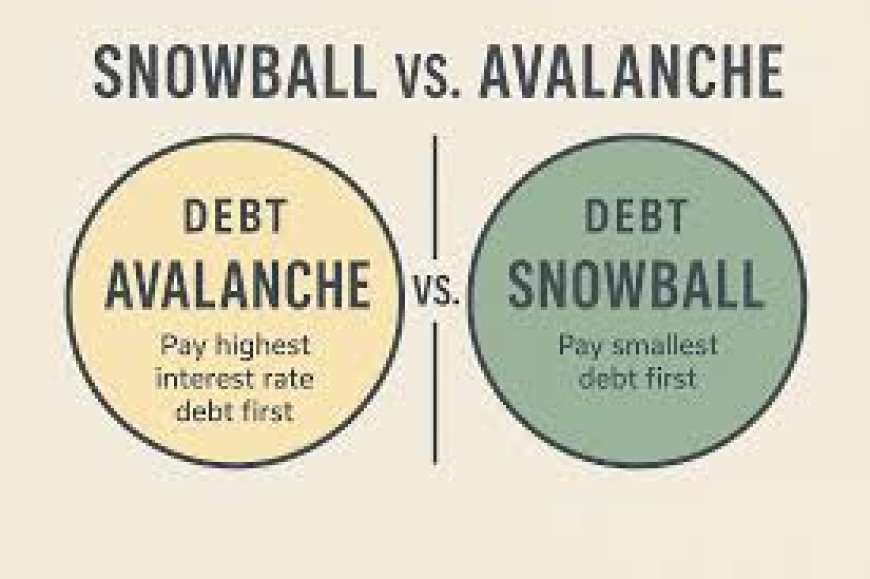
Debt Snowball vs Debt Avalanche: Which Payoff Method Works Best?
If you've decided to get serious about paying off debt, you've probably come across two names: the debt snowball and the debt avalanche. Both are proven strategies used by millions of people in the US and UK to eliminate credit card balances, personal loans, car finance, and other debts. Both work. But they work differently and choosing the wrong one for your personality and financial situation can mean the difference between a plan you stick to and one you abandon six months in.
This guide gives you the complete picture: how each method works, the real numbers behind both, which method saves more money, which one keeps more people on track, and most importantly which one is right for you.
What Is the Debt Snowball Method?
The debt snowball method, popularised by personal finance author Dave Ramsey, is built around one simple principle: pay off your smallest debt first, regardless of interest rate.
How It Works
- List all your debts from smallest balance to largest balance
- Pay the minimum payment on every debt
- Throw every extra dollar or pound at the smallest balance
- When the smallest debt is cleared, take that entire payment and add it to the minimum payment on the next-smallest debt
- Repeat your payment "snowballs" larger with each cleared account
The name is intentional. Just as a snowball rolling downhill gathers more snow and momentum with every rotation, your available monthly payment grows larger as each balance is cleared and its payment gets rolled forward.
Debt Snowball in Practice: An Example
Imagine you have the following debts and $500 per month available beyond your minimums:
|
Debt |
Balance |
APR |
Min Payment |
|
Store card |
$800 |
29% |
$25 |
|
Medical bill |
$1,200 |
0% |
$30 |
|
Credit card |
$5,500 |
22% |
$110 |
|
Car loan |
$12,000 |
8% |
$240 |
|
Personal loan |
$10,500 |
15% |
$220 |
|
Total |
$30,000 |
$625 |
With the snowball method, you'd attack the $800 store card first, adding your $500 extra to the $25 minimum paying $525/month on that single balance. The store card is cleared in approximately 2 months. You then roll $525 into the medical bill, clearing it in roughly 2 more months. Each cleared balance makes your "snowball" payment bigger and faster.
The psychological payoff is immediate and real. Within four months, you've eliminated two debts entirely the number of accounts you manage is shrinking, and you have proof that the plan is working.
What Is the Debt Avalanche Method?
The debt avalanche method is the mathematically optimal approach to debt repayment: pay off your highest-interest debt first, regardless of balance size.
How It Works
- List all your debts from highest interest rate to lowest interest rate
- Pay the minimum payment on every debt
- Throw every extra dollar or pound at the highest-rate balance
- When the highest-rate debt is cleared, roll that entire payment into the next-highest-rate debt
- Repeat your payment "avalanches" down through the interest rate hierarchy
The logic is pure: the highest-interest debt is the one actively costing you the most money every single day you carry it. By eliminating it first, you stop the bleeding at its source.
Debt Avalanche in Practice: Same Example
Using the same $30,000 debt list, the avalanche reorders priorities by interest rate:
|
Debt |
Balance |
APR |
Min Payment |
|
Store card |
$800 |
29% |
$25 |
|
Credit card |
$5,500 |
22% |
$110 |
|
Personal loan |
$10,500 |
15% |
$220 |
|
Car loan |
$12,000 |
8% |
$240 |
|
Medical bill |
$1,200 |
0% |
$30 |
|
Total |
$30,000 |
$625 |
Coincidentally, the highest-rate debt is also the smallest balance in this example so early progress feels fast. But often, the highest-rate debt carries a larger balance (think: a $7,000 credit card at 26% APR), meaning you could be paying that single balance down for a year or more before your first account hits zero. That extended first phase is where many avalanche plans run out of steam emotionally.
Debt Snowball vs Avalanche: The Numbers Head-to-Head
Let's put specific numbers to the debate. Using a simplified example three debts, $500/month extra available here's how the methods compare:
Debt portfolio:
- Debt A: $1,000 at 6% APR (min payment $20)
- Debt B: $4,000 at 24% APR (min payment $80)
- Debt C: $8,000 at 18% APR (min payment $160)
Snowball order: Debt A → Debt C → Debt B
Avalanche order: Debt B → Debt C → Debt A
|
Method |
Total Interest Paid |
Time to Debt Freedom |
|
Debt Snowball |
~$2,940 |
~22 months |
|
Debt Avalanche |
~$2,440 |
~21 months |
The avalanche saves approximately $500 in interest and clears debt roughly one month faster in this example.
The interest savings from the avalanche grow in proportion to the size of the debt and the spread between interest rates. If your highest-rate debt is $10,000 at 28% APR, the avalanche could save you $2,000–$3,000+ compared to the snowball. If your debts carry similar rates and your smallest balance also happens to carry the highest rate, the difference between methods narrows to near zero.
The bottom line on the math: the avalanche almost always wins on paper. The question is whether the paper version of the plan survives contact with real life.
The Psychological Reality: Why Snowball Often Beats Avalanche in Practice
Here's where the debate gets genuinely interesting and where research starts to challenge the purely mathematical view.
A 2016 study published in the Journal of Marketing Research examined the repayment behaviour of thousands of debt holders and found that people who focused on paying off individual accounts regardless of interest rate paid down their debt faster than those splitting payments proportionally. The act of eliminating a complete account produced a measurable behavioural boost that sustained effort over time.
A separate study from Harvard Business Review researchers reached a similar conclusion: the psychological satisfaction of clearing a balance entirely creates forward momentum that offsets the mathematical disadvantage of ignoring interest rates.
Why does this matter practically?
Because a plan you abandon is infinitely more expensive than a mathematically imperfect plan you complete.
If the avalanche method means you spend 14 months chipping away at a single $12,000 credit card balance before your first account clears and you give up at month 9 you've saved nothing compared to the avalanche's theoretical efficiency. The snowball's early wins aren't just feel-good moments. They're retention mechanisms that keep the plan alive.
This is especially relevant for:
- First-time debt repayers who haven't built the habit of large monthly debt payments
- People with many accounts clearing several smaller debts quickly reduces financial complexity as well as balances
- Anyone with a history of abandoning financial plans the snowball's early rewards counter the pattern of early dropout
When the Avalanche Is Clearly the Better Choice
The avalanche's mathematical advantage becomes large enough to override the psychological argument in specific scenarios:
When your highest-rate debt also has the highest balance. If you have a $15,000 credit card at 27% APR, that debt is costing you approximately $340 per month in interest alone. Every month you defer attacking it costs money that could be reducing the principal. The avalanche makes its case most powerfully here.
When interest rate spreads are wide. If some debts carry 5–8% APR (car loans, mortgages, student loans) and others carry 24–28% APR (credit cards, store cards), the cost of ignoring that gap compounds significantly over a multi-year repayment timeline.
When you have strong discipline and don't need emotional reward to stay motivated. Some people are genuinely motivated by the numbers. Watching the total interest figure fall and knowing they're optimising financially is its own reward. If that's you, the avalanche is the better pick.
When your debts are few and large. With two or three large debts rather than five or six smaller ones, the snowball's quick-win advantage disappears you're not clearing accounts quickly regardless of method. In this case, directing resources at the most expensive debt first is clearly rational.
When the Snowball Is Clearly the Better Choice
When you have several small balances you can clear quickly. If you have four debts under $1,500 alongside two larger ones, the snowball lets you eliminate half your accounts within months. The simplification alone fewer payments to track, fewer due dates to manage reduces the cognitive load of debt repayment.
When motivation and consistency are your historical weak points. Be honest with yourself. If you've started financial plans before and not finished them, the snowball's reward structure is the appropriate tool for your psychology, regardless of what the math says.
When the interest rate difference between debts is small. If your debts are clustered between 15–20% APR rather than spread from 6% to 28%, the mathematical advantage of the avalanche shrinks significantly. The interest savings from prioritising by rate become minor enough that the snowball's psychological benefits clearly outweigh them.
When your smallest debt is also causing you the most stress. Emotional factors are valid financial inputs. If one debt — a loan from a family member, a store card you're embarrassed by, a balance associated with a painful period — is causing disproportionate stress, eliminating it first has real value that doesn't show up in an interest calculation.
A Third Option: The Hybrid Approach
Many successful debt payers particularly those with mixed debt profiles use a hybrid of both methods that captures the best of each.
The hybrid strategy works like this:
- Identify any debts with balances under $1,000–$1,500. Clear these first using snowball logic for quick psychological wins and account simplification.
- Once small balances are cleared, switch to avalanche logic for remaining debts attacking in order of interest rate.
This approach typically costs marginally more in interest than a pure avalanche, but significantly less than a pure snowball. More importantly, it delivers early momentum that keeps the plan alive through the longer middle phase.
In practice, a hybrid plan might look like this: clear your $600 store card and $900 medical debt in the first two months (snowball), then switch to attacking your $8,000 credit card at 25% APR before your $5,000 personal loan at 12% (avalanche). The switch is deliberate and planned not a sign of inconsistency.
What About Debt Consolidation Alongside Either Method?
Both the snowball and the avalanche work most powerfully when combined with interest rate reduction through consolidation or balance transfer.
Reducing your average APR from 22% to 12% through a personal consolidation loan saves you thousands in total interest and makes your extra monthly payments dramatically more effective at reducing principal.
Transferring high-rate card balances to a 0% balance transfer card is even more powerful every payment goes entirely to principal during the promotional window. In the US, 0% periods of 15–21 months are available from major issuers. In the UK, 20–30 month deals are widely available from Barclaycard, Halifax, MBNA, and others.
Whether you choose snowball or avalanche, consolidating your highest-rate debt first creates the most favourable conditions for either method to succeed.
Snowball vs Avalanche: Choosing Based on Your Debt Profile
Still unsure which method is right for you? Use this framework:
Choose the debt snowball if:
- You have 4 or more accounts to manage
- You have at least 2–3 small balances (under $1,500) you can clear within 3–4 months
- You have a history of not finishing financial plans
- Your debts carry similar interest rates (within 5–8% of each other)
- You need visible proof of progress to stay committed
Choose the debt avalanche if:
- You have 2–3 large debts rather than many small ones
- Your highest-rate debt carries a significantly higher APR (15%+ above your lowest-rate debt)
- You are strongly motivated by numbers and financial optimisation
- Your highest-rate debt is also a large balance the interest cost of deferring is genuinely significant
- You have successfully stuck to multi-year financial plans before
Choose the hybrid if:
- You have a mix of small and large balances
- You want early motivation without fully sacrificing mathematical efficiency
- Your debt profile is complicated multiple rates, multiple sizes and no single method clearly fits
The Most Important Rule of All: Pick One and Commit
The debt snowball vs avalanche debate has a hidden trap: using it as a reason to delay starting. People spend weeks researching both methods, building spreadsheets, and running scenarios — all of which feels productive but produces no actual debt reduction.
The mathematical difference between a well-executed snowball and a well-executed avalanche over 2–3 years is real but not life-changing. The difference between any completed debt payoff plan and one abandoned at month 11 is enormous.
Pick the method that fits your psychology and your debt profile. Start this month. Review quarterly. Adjust if needed. The method is the vehicle your commitment is the engine.
In the US, free tools like Undebt.it, Vertex42's debt payoff calculators, and the r/personalfinance community can help you model both approaches with your actual numbers before committing.
In the UK, the MoneySavingExpert debt-free wannabe forum, the r/UKPersonalFinance subreddit, and free tools from StepChange and MoneyHelper can provide both practical modelling and community support.
The Bottom Line: Debt Snowball vs Debt Avalanche
The debt avalanche saves more money. The debt snowball keeps more people on track. Neither statement is universally true for every borrower but both are backed by real data.
If you're a disciplined, numbers-driven person whose highest-rate debts carry the largest balances, the avalanche is your method. If you're building the debt repayment habit for the first time, have multiple accounts to manage, or need early wins to stay motivated, the snowball is your method. If you're somewhere in between, the hybrid gives you the best of both worlds.
What neither method can do is work unless you use it. Choose, start, and keep going.
Recommended posts
Personal Loan vs Credit Card: Which Is Better for Debt Consolidation in 2026?
How to Get Out of Credit Card Debt Fast: A Step-by-Step Plan for 2026
How to Escape the Rat Race in 2026: Proven Steps to Financial Freedom
How to Save for a Home Deposit in 2026: Practical Tips and for Homeownership
What's Your Reaction?