






















How to Pay Off $30,000 in Debt in 2 Years on an Average Salary
Discover practical strategies to pay off $30,000 in debt within 2 years, even on an average salary. Learn budgeting tips, debt repayment methods, side hustle ideas, and money-saving techniques for 2026.


How to Pay Off $30,000 in Debt in 2 Years on an Average Salary
Thirty thousand dollars. Two years. Average income. If that sounds impossible, you're not alone but the math is more achievable than most people think, and thousands of ordinary earners have done it. Whether your debt is spread across credit cards, a personal loan, a car note, or some combination of all three, this is a realistic, step-by-step guide for paying off $30,000 in debt within 24 months even if you're living on a median US or UK salary.
This isn't a plan built on windfalls, side hustles that take years to build, or extreme deprivation. It's built on math, strategy, and the kind of behavioral changes that are hard at first and then become second nature. Let's get into it.
First, Let's Run the Numbers
To pay off $30,000 in exactly 24 months, you need to eliminate roughly $1,250 per month in principal plus whatever interest accumulates along the way.
If your debt carries an average interest rate of 20% APR (typical for credit card debt in the US and UK), the real monthly payment target rises closer to $1,500 per month to hit a two-year payoff date.
Here's a quick snapshot:
|
Avg APR |
Monthly Payment Needed |
Total Interest Paid |
|
10% |
~$1,384/month |
~$3,220 |
|
15% |
~$1,450/month |
~$4,813 |
|
20% |
~$1,521/month |
~$6,514 |
|
25% |
~$1,595/month |
~$8,274 |
The key insight from this table: Reducing your interest rate is just as powerful as earning more money. A borrower paying 25% APR needs to find an extra $211 per month compared to someone who consolidates to 10% APR. That's a significant difference and it's why strategy matters as much as income.
So the two-year plan has two parallel tracks: cut your interest rate and increase your monthly payment. Everything in this guide feeds one or both of those objectives.
Step 1: Know Your Full Debt Picture
Before you can attack $30,000, you need to know exactly what you're dealing with. Pull every statement, log into every account, and build a single debt inventory that includes:
- Creditor name
- Outstanding balance
- Interest rate (APR)
- Minimum monthly payment
- Due date
Add it all up. Seeing the full number in one place is uncomfortable but it's also where the plan begins. You cannot navigate to a destination you haven't clearly mapped.
In the US, you can pull your full credit report for free at AnnualCreditReport.com to confirm you haven't missed any accounts. In the UK, use ClearScore or your Experian or TransUnion report (all free) to verify all active accounts and balances.
Step 2: Reduce Your Interest Rate — Immediately
This is the single highest-leverage action you can take, and most people skip it because it feels complicated. It's not.
Option A: Balance Transfer Credit Card
If a significant portion of your $30,000 is credit card debt, a 0% balance transfer card can eliminate interest entirely for 15 to 21 months in the US, or 20 to 30 months in the UK. Transfer fees are typically 1–5%, but that's a fraction of what you'd pay in interest over the same period.
In the US: Citi, Chase, and Wells Fargo offer some of the longest 0% transfer windows up to 21 months for well-qualified applicants.
In the UK: Barclaycard, MBNA, Halifax, and NatWest consistently offer 20–30 month 0% deals. Some cards are available with no transfer fee at all during promotional periods.
Even if you can only transfer $10,000–$15,000 of your total balance, eliminating interest on that portion frees up hundreds of dollars per month that can go toward the principal on your remaining debt.
Option B: Debt Consolidation Loan
A personal consolidation loan combines your debts at a single, fixed rate ideally well below what your current credit cards charge. If you're paying 22–27% on cards and can qualify for a personal loan at 9–14%, the savings compound significantly over 24 months.
US lenders worth checking: SoFi, LightStream, Marcus by Goldman Sachs, and Discover Personal Loans. Each offers pre-qualification with a soft credit check that doesn't affect your score.
UK lenders worth checking: Zopa, Tesco Bank, Sainsbury's Bank, and Hitachi Personal Finance. The Money Saving Expert loan eligibility checker lets UK borrowers compare multiple lenders in one place without a hard credit search.
The goal isn't to extend your repayment it's to lower the rate while maintaining (or increasing) your monthly payment.
Option C: Call Your Current Lenders
Many people don't know that credit card companies will sometimes reduce your interest rate simply because you ask especially if you've been a long-term customer with a reasonable payment history. Call the number on the back of your card, say you've received lower-rate offers elsewhere, and ask if they can match. It works more often than you'd expect.
Step 3: Build Your Aggressive Budget
To find $1,400–$1,600 per month for debt repayment on an average salary, you need a budget that leaves nothing on the table. Here's what average looks like in both markets:
US context: The median US household income is approximately $59,000 annually, or roughly $4,900 per month. After federal and state taxes, take-home pay is typically $3,700–$4,200 for a single earner.
UK context: The median UK full-time salary is approximately £35,000, or roughly £2,917 per month gross. After income tax and National Insurance, take-home pay for a basic-rate taxpayer is approximately £2,300–£2,500 per month.
In both cases, finding $1,400–$1,600 per month for debt repayment requires a real structural shift in spending not just cutting the odd coffee. Here's how to find the money:
Housing (The Biggest Lever)
If you have any flexibility here, it's transformative. Options worth seriously considering:
- Take on a roommate or lodger. In the US, renting a spare room can generate $600–$1,000 per month in major cities. In the UK, the government's Rent-a-Room Scheme allows you to earn up to £7,500 per year tax-free from a lodger.
- Move to a cheaper area or property temporarily. Two years of discomfort for a lifetime of financial freedom is a trade many people who've done it describe as one of the best decisions they made.
- Move back in with family if that option is available. There is nothing shameful about a 12–24 month arrangement that lets you redirect rent money directly to debt.
Subscriptions and Recurring Costs
Audit every direct debit and recurring charge. In the US and UK combined, the average household pays for 4–5 streaming services they don't fully use, a gym membership they rarely visit, subscription boxes, cloud storage tiers they've outgrown, and premium phone plans they could replace with SIM-only contracts.
A thorough subscription audit typically frees up $100–$250 per month with one afternoon's work. Use your bank's transaction history or an app like Rocket Money (US) or Emma (UK) to surface every recurring charge.
Food: The Second Biggest Variable
Dining out and food delivery are among the highest-margin spending categories for most households. In the US, the average household spends $3,000–$5,000 per year on restaurants and takeaways. In the UK, the average is £2,000–£3,000.
A practical target: reduce dining out to once per week maximum during your two-year sprint. Meal plan weekly. Cook in bulk. Pack lunches. This single category change can free $300–$500 per month.
Transport
- In the US: If you have a car loan and own another vehicle, consider selling it and going single-car or going carless if your location supports it.
- In the UK: If you drive to work, calculate the cost vs. cycling or public transport. Many UK commuters save £2,000–£4,000 per year by switching from car commuting to a bicycle.
- For both markets: shop your car insurance annually comparative sites like Compare the Market (UK) or The Zebra (US) routinely surface savings of 20–40% for the same coverage.
Step 4: Choose Your Payoff Strategy
With your budget tightened and your interest rate as low as possible, you now need a system for directing your extra payments.
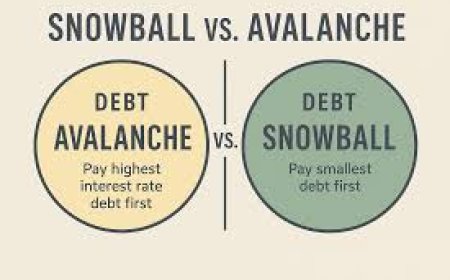
The Debt Avalanche (Maximum Efficiency)
List your debts from highest interest rate to lowest. Pay the minimum on everything and throw every extra dollar at the highest-rate balance. Once it's cleared, roll that payment into the next-highest balance.
On a $30,000 debt spread across multiple accounts, the avalanche method minimises total interest paid often saving thousands compared to random or even-distribution payments.
Best for: People motivated by optimising the numbers and who don't need early psychological wins to stay on track.
The Debt Snowball (Maximum Momentum)
List your debts from smallest balance to largest, ignoring interest rates. Pay the minimum on everything and attack the smallest balance first. Once cleared, roll that payment into the next smallest.
Research consistently shows that the snowball method keeps more people on track through the full repayment period. Clearing your first account in weeks or months rather than tackling a $15,000 card for years provides genuine psychological fuel.
Best for: People who need early wins and momentum-based motivation to sustain a 24-month plan.
Hybrid approach: If one or two small balances can be cleared quickly, snowball those first for the psychological win, then switch to the avalanche for the remaining larger balances. Many successful debt-payers use this combination.
Step 5: Increase Your Income
Cutting $500 per month in expenses is hard. Earning an extra $500 per month is hard. But together, they produce the $1,000–$1,500 monthly payment surge that makes a two-year timeline genuinely achievable on an average salary.
Here are realistic income-boosting strategies that don't require years of skill-building:
Sell Everything You Don't Need
Most households have $500–$2,000 worth of dormant assets: old electronics, musical instruments, furniture, clothing, tools, sports equipment, games. A dedicated weekend on eBay, Facebook Marketplace, Craigslist (US), or Gumtree and Vinted (UK) can generate a meaningful lump-sum payment that punches a hole in a smaller balance immediately.
Overtime and Shift Pickup
If your employer offers overtime, these are the two years to take it. Even four hours per week of overtime on a median salary generates roughly $300–$400 per month extra in the US or £200–£300 in the UK, depending on your hourly rate. Every pound and dollar goes straight to your highest-priority debt.
Monetise an Existing Skill
You don't need to build a business you need to find three to five paying clients who need something you already know how to do:
- Writing, editing, or proofreading
- Bookkeeping or data entry
- Photography or video editing
- Web design or social media management
- Tutoring or language instruction
- Manual trades: plumbing, electrical, painting, landscaping
Platforms like Upwork, Fiverr, TaskRabbit, and Bark.com (UK) make this accessible without a business infrastructure. Even $300–$600 per month in freelance income, added consistently to your debt payment, compresses a two-year timeline significantly.
Gig Economy Work
For periods when you need fast cash injections to clear a smaller balance or fund an emergency without touching savings — gig economy work is the most accessible option in both countries:
- US: DoorDash, Uber Eats, Instacart, Amazon Flex
- UK: Deliveroo, Just Eat, Stuart, Amazon Flex
These roles don't replace professional income, but three to four evenings per week can generate £400–£700 (UK) or $500–$900 (US) in supplemental income per month during a sprint phase.
Step 6: Protect Your Progress — Build a Starter Emergency Fund First
One of the most common reasons debt payoff plans fail is an unexpected expense a car repair, a medical bill, a broken appliance that the borrower has no savings to cover. The result: new debt on top of the old debt, and the plan collapses.
Before throwing everything at debt, build a small emergency buffer of $1,000–$1,500 (US) or £800–£1,200 (UK). This is not your full emergency fund — that can wait until debt is cleared. But a starter buffer means that a $600 car repair doesn't become $600 at 24% APR on a credit card.
Once the buffer exists, every remaining surplus goes to debt.
Step 7: Track Every Month and Automate Everything
A 24-month debt payoff plan requires 24 months of consistency. Discipline matters, but systems are more reliable than discipline.
Automate your payments: Set up automatic transfers for your minimum payments and your targeted extra payment on your priority debt. Schedule them for the day after payday so the money is committed before you have the opportunity to spend it elsewhere.
Track your net worth monthly: Tools like Personal Capital (now Empower) in the US, or the spreadsheet-based tracking beloved by the UK's Money Saving Expert community, let you watch your total debt shrink in real time. This visual feedback is genuinely motivating over a multi-month timeline.
Use a debt payoff tracker: A simple printed chart coloured in as balances fall displayed somewhere you see it daily has been shown to meaningfully improve follow-through on debt repayment plans. Low-tech, but highly effective.
Review and adjust quarterly: Life changes. Income changes. Reassess your plan every three months: Has your interest rate changed? Can you increase your monthly payment? Have you cleared a balance and need to redirect that payment?
What a Realistic Monthly Plan Looks Like
Here's an example of how a single US earner on a $55,000 salary (approximately $3,800 take-home per month after taxes) might structure a $30,000 two-year payoff:
|
Category |
Monthly Budget |
|
Rent (with roommate) |
$700 |
|
Groceries & household |
$300 |
|
Transport |
$200 |
|
Utilities & phone |
$150 |
|
Health insurance |
$200 |
|
Personal & clothing |
$100 |
|
One meal out per week |
$150 |
|
Small emergency buffer contribution |
$50 |
|
Debt repayment |
$950 |
|
Freelance income (part-time) |
+$400 |
|
Total to debt |
$1,350/month |
At $1,350/month against $30,000 at 15% average APR, payoff occurs in approximately 25–26 months. Shave a little more from discretionary spending, pick up two extra overtime shifts per month, or reduce the APR through consolidation and 24 months becomes entirely achievable.
A UK equivalent on £28,000 take-home (approximately £1,900/month after tax and NI) follows a proportional structure, with rent sharing, careful grocery management (Aldi and Lidl instead of premium supermarkets), and side income through platforms like Bark or Vinted closing the gap.
The Psychology of a Two-Year Payoff Sprint
Two years is long enough to feel endless at the start and short enough to see the finish line if you keep looking. The biggest threat to a 24-month plan isn't the math it's motivation fatigue around months 8 to 12, when the novelty wears off and the end still feels far away.
What actually helps:
- Name your "why." Not "get out of debt" that's too abstract. "Buy a home by 35." "Stop the Sunday night anxiety." "Send my parents on a trip." Attach the plan to something emotionally real.
- Find your people. Communities like r/UKPersonalFinance and r/personalfinance, or the MoneySavingExpert forum in the UK, are full of people doing exactly what you're doing. Sharing progress, setbacks, and strategies with others on the same path improves both accountability and morale.
- Celebrate every cleared balance. Each account that hits zero deserves acknowledgment. Not a celebration that costs money a meal you cook at home, a day trip, a film at home with someone you care about. Mark it.
The people who pay off $30,000 in two years on average salaries aren't extraordinary. They're people who made a decision, built a system, and kept going when it was inconvenient. That's the entire formula.
The Bottom Line
Paying off $30,000 in debt in two years on an average salary requires roughly $1,350–$1,600 per month going toward your balances. That number is achievable through a combination of interest rate reduction, budget restructuring, and modest income supplementation none of which requires a dramatic life change or a financial miracle.
Start today with two actions: build your debt inventory and check your eligibility for a balance transfer card or consolidation loan. Those two moves set the foundation for everything else.
The two years will pass regardless. The only question is whether your $30,000 debt passes with them.
Recommended posts
Personal Loan vs Credit Card: Which Is Better for Debt Consolidation in 2026?
How to Get Out of Credit Card Debt Fast: A Step-by-Step Plan for 2026
How to Escape the Rat Race in 2026: Proven Steps to Financial Freedom
7 Proven Budgeting Tips to Create a Financial Plan for Any Income in 2026
What's Your Reaction?