

















Personal Loan vs Credit Card: Which Is Better for Debt Consolidation in 2026?
Compare personal loans vs credit cards for debt consolidation in 2026. Learn the pros, cons, interest rates, repayment terms, and which option can help you save money and pay off debt faster.

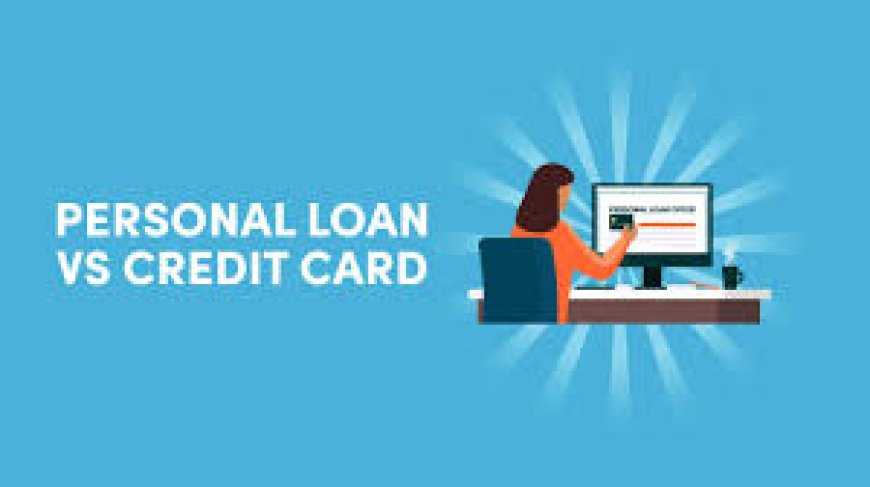
Personal Loan vs Credit Card: Which Is Better for Debt Consolidation?
If you're carrying debt across multiple accounts, you've probably asked yourself: should I consolidate with a personal loan or a balance transfer credit card? Both options can slash your interest costs and simplify your payments but they work very differently, suit different financial situations, and come with distinct risks. This guide breaks down the personal loan vs credit card debt consolidation debate in full, so you can make the smartest choice for your specific circumstances.
What Is Debt Consolidation and Why Does It Matter?
Debt consolidation means combining multiple debts credit cards, store cards, overdrafts, or other loans into a single account with one monthly payment. The goal is usually twofold: reduce the interest rate you're paying, and simplify repayment so nothing slips through the cracks.
Done right, debt consolidation can save you thousands of dollars or pounds in interest and help you become debt-free years sooner. Done wrong by consolidating without changing the spending habits that created the debt it can leave you worse off, with old balances back on your credit cards and a new loan on top.
The two most widely used consolidation tools are personal loans and balance transfer credit cards. Each has a clear use case. Understanding which one fits your situation is the key to making this work.
Option 1: Personal Loan for Debt Consolidation
A personal loan is a fixed amount of money borrowed from a bank, credit union, or online lender. You receive the funds as a lump sum, use them to pay off your existing debts, and then repay the loan in fixed monthly instalments over a set term typically 2 to 7 years.
How It Works
Say you have $12,000 in credit card debt spread across three cards, each charging between 20% and 27% APR. You apply for a personal loan at 10% APR over 3 years. The lender approves you, pays off (or gives you funds to pay off) your cards, and you now owe one lender a fixed monthly payment until the loan is cleared.
Pros of Using a Personal Loan to Consolidate Debt
Fixed interest rate. Most personal loans come with a fixed APR, meaning your rate and your monthly payment never changes. This makes budgeting predictable and eliminates the risk of rate increases.
Structured repayment timeline. A personal loan has a defined end date. You know exactly when you'll be debt-free, which is psychologically powerful and practically useful for financial planning.
Lower rates for good credit. Borrowers with good to excellent credit (670+ in the US; 881+ Experian score in the UK) can often access personal loan rates well below the average credit card APR. In the US, rates from lenders like SoFi, LightStream, and Marcus by Goldman Sachs can start as low as 7–10% APR. In the UK, lenders like Zopa, Tesco Bank, and Sainsbury's Bank often advertise representative rates of 6–12% APR for creditworthy borrowers.
No temptation to re-use. Once you pay off your credit cards with a personal loan, the cards are empty. Unlike a revolving credit line, a loan can't be re-drawn. This removes the temptation (and the risk) of running balances back up provided you exercise discipline.
Higher borrowing limits. If you have a large amount of debt — $15,000, $20,000, or more personal loans can typically accommodate this. Balance transfer cards generally have lower credit limits, especially for new applicants.
Cons of Using a Personal Loan
You need decent credit to get a good rate. If your credit score is fair or poor, the rate you're offered on a personal loan may not be much better than what you're already paying on your credit cards — making consolidation pointless or even counterproductive.
Origination fees. Some personal loan lenders charge an origination fee of 1–6% of the loan amount, deducted upfront or added to the loan balance. Always factor this into your total cost calculation.
No 0% interest window. Unlike balance transfer cards, personal loans don't offer interest-free introductory periods. You start paying interest from day one, even if the rate is lower than your existing debts.
Monthly payments are obligatory. A fixed repayment schedule is mostly a benefit, but it also means you're locked in. If your income drops unexpectedly, a fixed loan payment could strain your budget in ways a minimum credit card payment might not (at least in the short term).
Option 2: Balance Transfer Credit Card for Debt Consolidation
A balance transfer credit card allows you to move existing credit card debt onto a new card — typically one offering a 0% introductory APR on transferred balances for a set period. During that window, every penny of your payment goes toward the principal, not interest.
How It Works
You apply for a balance transfer card and, once approved, request that your existing balances be moved across. The new card issuer pays off your old cards and the debt now sits on your new account at 0% (or a very low rate) for the promotional period — which can range from 12 to 30 months depending on the card and your credit profile.
Pros of Using a Balance Transfer Card
0% interest window is incredibly powerful. If you can clear your debt within the promotional period, you pay zero interest at all. On a $6,000 balance, that could save $1,200–$1,600 in interest compared to carrying it on a standard credit card.
In the US, top balance transfer cards from issuers like Citi (Citi Diamond Preferred), Wells Fargo, and Chase offer 0% periods of 15–21 months. Most charge a transfer fee of 3–5%.
In the UK, the market is even more competitive. Cards from Barclaycard, MBNA, Halifax, and NatWest regularly offer 0% periods of 20–30 months with transfer fees of 1.5–3%. Some deals even offer fee-free transfers.
Simpler application process. Applying for a balance transfer card is often faster than getting a personal loan, with many issuers providing instant online decisions.
Flexibility. Unlike a personal loan, a balance transfer card doesn't lock you into a fixed monthly payment. If you come into extra money, you can pay more. There's no penalty for paying early.
Great for smaller balances. If your total debt is $5,000–$8,000 and you can realistically clear it within 18–24 months with disciplined payments, a 0% balance transfer card is almost certainly the cheapest path.
Cons of Using a Balance Transfer Card
The 0% rate is temporary. After the promotional period ends, the rate reverts often to 20–25% or higher. If you haven't cleared the balance by then, you're back to paying punishing interest. This is where many people get caught out.
Transfer limits may be lower than your total debt. You may not be able to transfer all your existing balances onto one card, especially if your credit limit on the new card is modest.
Balance transfer fees add up. A 3% fee on a $10,000 transfer is $300. It's still usually worth it, but it's not truly "free" money.
Requires strong credit. The best 0% deals especially the long ones are reserved for applicants with good to excellent credit. If your score has already taken a hit from high utilisation or missed payments, you may not qualify for the top offers.
Risk of re-accumulating debt. This is the biggest danger. Once your old cards are paid off, you have empty credit limits again. Without a deliberate change in spending behaviour, many people run those balances back up and then find themselves with both the old card debt and the new balance transfer card to repay.
Personal Loan vs Balance Transfer Card: Head-to-Head Comparison
|
Feature |
Personal Loan |
Balance Transfer Card |
|
Interest rate |
Fixed, typically 6–20% APR |
0% intro, then 20–25%+ |
|
Best for |
Large debts ($10,000+) |
Smaller debts under $10,000 |
|
Repayment structure |
Fixed monthly payments |
Flexible minimum payments |
|
Debt-free date |
Defined and guaranteed |
Depends on your discipline |
|
Credit score required |
Good to excellent |
Good to excellent |
|
Transfer/origination fees |
1–6% origination |
1–5% transfer fee |
|
Risk of re-accumulating debt |
Lower |
Higher |
|
Introductory 0% period |
No |
Yes (12–30 months) |
|
Borrowing limits |
Higher (up to $50,000+) |
Lower (varies by card) |
|
US examples |
SoFi, LightStream, Marcus |
Citi, Chase, Wells Fargo |
|
UK examples |
Zopa, Tesco Bank, Sainsbury's |
Barclaycard, Halifax, MBNA |
Which Option Is Right for You? A Practical Decision Guide
Choose a Personal Loan If…
Your total debt exceeds $10,000 (or £10,000). Balance transfer cards may not offer high enough limits to cover large balances, and personal loans are built for larger sums.
You want a guaranteed debt-free date. A fixed loan term of 3–5 years gives you certainty. You know the exact month your debt ends, which a revolving credit card cannot offer.
You're worried about reverting to old habits. A personal loan removes access to revolving credit. If you're concerned about reloading balances onto your old cards, the structured nature of a loan provides a helpful guardrail.
You can get a significantly lower rate than your existing debt. If your cards are charging 22–27% APR and you qualify for a personal loan at 9–12%, the savings are substantial even across a multi-year repayment period.
Your debt includes non-card obligations. Personal loans can be used to consolidate other debt types too, including overdrafts, store finance, and personal lending. Balance transfer cards only accept credit card balances.
Choose a Balance Transfer Card If…
Your total balance is under $8,000–$10,000. Smaller balances are ideal for the 0% transfer model you can realistically clear them within the promotional window.
You're confident you can clear the balance before the 0% period ends. Divide your debt by the number of 0% months. If that monthly payment is affordable, a balance transfer card is likely your cheapest option.
You want to pay zero interest. A 0% deal properly used is the best-case scenario for debt consolidation. No personal loan can match a true 0% interest offer.
You need flexibility. If your income fluctuates month to month, the ability to pay more when you have it (and less when you don't) may suit you better than a fixed loan repayment.
Common Mistakes to Avoid with Either Option
Consolidating without changing behaviour. Debt consolidation is a tool, not a cure. If the spending habits that created the debt don't change, you'll rebuild balances on your cleared cards and end up in a worse position than before.
Not reading the full terms. Understand what happens after a 0% period ends. Know your personal loan's origination fee, prepayment penalties (rare but worth checking), and what the monthly payment looks like in your budget.
Applying for too many products at once. Each application triggers a hard credit inquiry, which temporarily reduces your score. Shop around using eligibility checkers (available from most US and UK lenders) that use a soft search and don't affect your credit.
Forgetting to close or not close old accounts. Closing old cards immediately after consolidation can hurt your credit utilisation ratio. Conversely, leaving them open creates temptation. Assess which approach makes sense for your credit profile and self-discipline level.
Ignoring fees in the total cost calculation. A personal loan at 10% APR with a 5% origination fee on $10,000 costs $500 upfront. A balance transfer card with a 3% fee costs $300. Always calculate the full cost not just the headline rate.
What About Your Credit Score?
Both options affect your credit, but typically in manageable ways:
Applying for a personal loan or balance transfer card causes a temporary dip from the hard inquiry usually 5–10 points. However, consolidation can improve your credit over time by reducing your credit utilisation ratio (especially if old card balances are cleared) and establishing a consistent payment history.
In the US, credit utilisation accounts for around 30% of your FICO score. In the UK, high utilisation is similarly penalised by Experian, Equifax, and TransUnion. Paying down balances through consolidation can meaningfully improve your score within 3–6 months.
The Bottom Line: Personal Loan vs Credit Card for Debt Consolidation
There's no single "best" answer the right choice depends on your debt size, credit profile, repayment discipline, and financial goals.
Use a balance transfer card if your debt is under $10,000, you have strong credit, and you're confident you can clear the balance during the 0% window. Done right, it's the cheapest consolidation tool available.
Use a personal loan if your debt is larger, you want predictability, you're at risk of rebuilding card balances, or you need to consolidate non-card debt. The fixed structure and defined end date make it a powerful, reliable path to becoming debt-free.
Whichever route you choose, the most important variable isn't the product it's the commitment you make to repaying the debt without creating new obligations alongside it. Consolidation buys you better terms. The work of actually becoming debt-free is still yours to do.
Take the next step today: check your credit score for free through tools like Credit Karma or Experian Boost in the US, or ClearScore and Credit Karma UK, and start comparing the options available to your specific credit profile before choosing.
This article is for informational and educational purposes only and does not constitute financial advice. Always compare products independently and, where needed, seek guidance from a qualified financial advisor or accredited credit counsellor.
Recommended posts
Home Insurance vs Home Warranty: What’s the Difference in 2026?
Best Renters Insurance Companies in 2026: Cheap, Reliable & Affordable Coverage (US & UK Guide)
How Much Does Health Insurance Cost Without Employer Coverage in 2026? (US & UK Guide)
How to Save for a Home Deposit in 2026: Practical Tips and for Homeownership
What's Your Reaction?