



















Disability Insurance for Self-Employed Workers: What You Need to Know in 2026
Discover how disability insurance for self-employed professionals works, what it covers, average costs, and how to choose the best policy to protect your income in 2026.

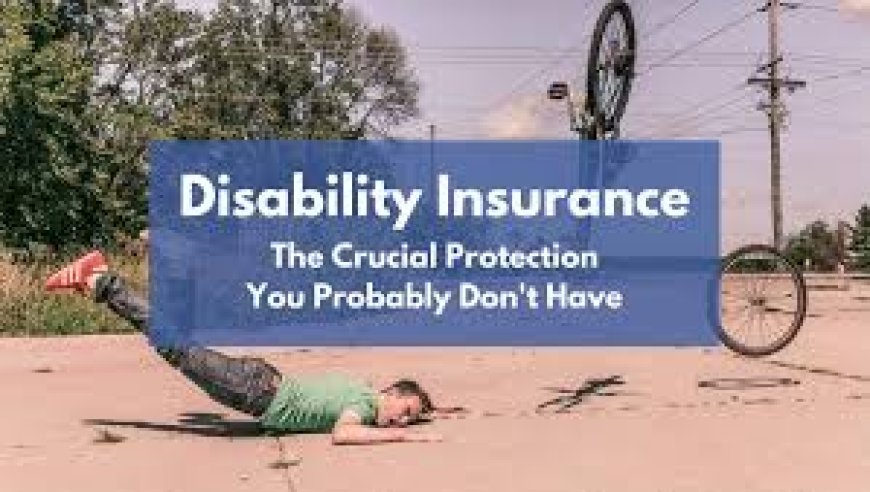
When you work for an employer, disability coverage often comes as part of your benefits package quietly sitting there in the background, ready if you ever need it. When you're self-employed, that safety net simply doesn't exist. No HR department is managing it. No employer is subsidizing it. If you get sick or injured and can't work, your income stops.
For freelancers, independent contractors, sole traders, gig workers, and small business owners, disability insurance is one of the most important and most overlooked financial protections available. This guide explains exactly what disability insurance for the self-employed is, what it covers, how much it costs, and how to find the right policy whether you're based in the United States or the United Kingdom.
Why Disability Insurance Matters More When You're Self-Employed
Before diving into how disability insurance works, it's worth understanding the risk you're actually carrying.
Statistics paint a sobering picture. According to the Social Security Administration, more than one in four 20-year-olds will experience a disabling condition before they reach retirement age. The average long-term disability claim in the U.S. lasts nearly three years and many last far longer.
For employees, short-term disability, long-term disability, and in some cases statutory sick pay provide a cushion. For the self-employed, there is no such cushion unless you build one yourself.
Consider what a disability actually means for your business:
- Your income stops immediately. Unlike an employee who may receive sick pay, your clients don't pay you when you're not working.
- Your business expenses don't stop. Software subscriptions, insurance premiums, lease payments, loan repayments they keep coming regardless of your health.
- Your personal financial obligations continue. Mortgage or rent, utilities, groceries, car payments none of these care that you're injured.
Even a three-to-six-month gap in income can wipe out years of savings and force the closure of a business you spent years building. Disability insurance exists to prevent exactly that.
What Is Disability Insurance?
Disability insurance also called income protection insurance in the UK is a policy that pays you a monthly benefit if you're unable to work due to illness or injury. It replaces a portion of your lost income, typically 50–80% of your pre-disability earnings, allowing you to cover your essential expenses while you recover.
There are two main types:
Short-Term Disability Insurance
Short-term disability (STD) policies typically cover disabilities lasting a few weeks up to 6–12 months. Benefits usually begin after a short elimination period (the waiting period before payments start) of 0–14 days.
Short-term disability is less commonly purchased as a standalone policy by self-employed individuals, since it's relatively affordable to self-insure this period through an emergency fund. However, it can make sense for those without substantial savings.
Long-Term Disability Insurance
Long-term disability (LTD) insurance is the more critical purchase for self-employed people. These policies kick in after a longer elimination period typically 90 days and can pay benefits for several years, up to age 65, or even for life, depending on the policy.
The elimination period is the key lever that controls your premium. The longer you're willing to wait before benefits begin, the lower your monthly cost. Most self-employed individuals choose a 90-day elimination period, which means your emergency fund (ideally 3–6 months of expenses) bridges the gap before the policy pays out.
Key Policy Features to Understand
Not all disability insurance policies are equal. These are the terms that matter most when shopping for coverage as a self-employed person.
Own-Occupation vs. Any-Occupation Definition
This is arguably the most important distinction in any disability insurance policy.
- Own-occupation disability insurance pays benefits if you're unable to perform the specific duties of your occupation. A surgeon with a hand injury who can no longer operate but could work as a medical consultant would still receive benefits under an own-occupation policy.
- Any-occupation disability insurance only pays if you're so disabled that you can't perform any work at all. This is a much higher bar and far less protective for skilled professionals.
For self-employed professionals doctors, lawyers, consultants, tradespeople, designers own-occupation coverage is strongly preferred. It's more expensive, but it's far more likely to pay out in a real-world disability scenario.
Benefit Period
The benefit period is how long the policy will pay benefits if you remain disabled. Common options include:
- 2 years — Affordable but limited
- 5 years — A middle-ground option
- To age 65 — The most comprehensive option and generally recommended for self-employed individuals who don't have a pension or retirement fallback
Elimination Period (Waiting Period)
The elimination period is the gap between when your disability begins and when benefits start. Common options are 30, 60, 90, or 180 days. Choosing a 90-day elimination period significantly lowers your premium while still providing protection against long-term income loss provided you have three months of savings available.
Non-Cancellable and Guaranteed Renewable
Look for a policy that is both non-cancellable and guaranteed renewable. This means the insurer cannot cancel your policy, raise your premiums, or change your coverage as long as you continue payingregardless of changes to your health. This is especially important for the self-employed, who can't easily switch to employer-provided coverage if their health deteriorates.
Residual or Partial Disability Benefits
Many disabilities don't result in a total inability to work they result in reduced capacity. A residual disability rider pays a partial benefit if you can still work but at a reduced level due to your condition. This is particularly valuable for self-employed people who may push through a disability and attempt to work part-time.
Cost of Living Adjustment (COLA)
A COLA rider increases your benefit each year to keep pace with inflation. Given that a long-term disability claim can last many years, this prevents your benefit from being eroded by rising costs of living over time.
How Much Does Disability Insurance Cost for the Self-Employed?
United States
In the U.S., disability insurance for self-employed individuals typically costs between 1–3% of your annual income. In practice, this means:
- A freelancer earning $60,000/year might pay $100–$200/month
- A self-employed consultant earning $120,000/year might pay $200–$400/month
- A self-employed physician earning $250,000/year might pay $500–$1,000/month
Premium factors include your age, gender, health history, occupation (higher-risk jobs cost more), benefit amount, benefit period, elimination period, and any riders you add.
One important note for U.S. self-employed individuals: disability insurance premiums are generally not tax-deductible for sole proprietors, but if benefits are paid, they are typically received tax-free. If you set up your business as an S-Corp and pay premiums through the business, different rules may apply — consult a tax professional for your specific situation.
United Kingdom
In the UK, income protection insurance for the self-employed typically costs between £50–£200/month, depending on:
- Your age and health
- Your occupation and income level
- The deferred period (the UK equivalent of the elimination period typically 4, 8, 13, 26, or 52 weeks)
- The benefit amount (usually 50–65% of pre-disability income)
- Whether the policy is own-occupation or suited-occupation defined
The longer your deferred period, the lower your premium. Self-employed individuals who can manage 13 or 26 weeks without income (or with savings) can significantly reduce their costs by choosing a longer deferred period.
Unlike in the U.S., UK income protection premiums are not tax-deductible for individuals, but benefits paid are generally received tax-free if premiums were paid personally. If you operate as a limited company and pay premiums through the business (called a Relevant Life-style arrangement or executive income protection), different tax treatment applies speak to a UK-qualified financial adviser.
What Disability Insurance Doesn't Cover
Understanding exclusions is as important as understanding coverage. Standard disability insurance policies typically exclude:
- Pre-existing conditions — Disabilities caused by medical conditions that existed before the policy start date are often excluded or subject to a waiting period
- Self-inflicted injuries
- Disabilities arising from criminal activity
- Normal pregnancy (though pregnancy complications may be covered)
- War or civil unrest
- Substance abuse (though some policies provide limited coverage)
Always disclose your full health history when applying. Failing to disclose a pre-existing condition is a form of misrepresentation and can result in your claim being denied when you need it most.
Government Disability Benefits: Don't Rely on Them
Both the U.S. and UK offer government disability programs, but neither should be counted on as a primary income replacement strategy for the self-employed.
United States: Social Security Disability Insurance (SSDI)
SSDI provides benefits to workers who become disabled and have paid sufficient Social Security taxes. Self-employed individuals who pay self-employment tax (which includes the Social Security component) are eligible to apply.
However, SSDI comes with major limitations:
- The approval process is lengthy — often 3–6 months initially, and many applicants are denied on the first attempt, making the full process take 1–2 years or more
- The definition of disability is strict — you must be unable to engage in any substantial gainful activity
- The average SSDI benefit is approximately $1,537/month (as of 2025) far below what most self-employed professionals need to maintain their lifestyle
United Kingdom: Employment and Support Allowance / Universal Credit
Self-employed people in the UK who become unable to work due to illness or disability may be eligible for Universal Credit or New-Style Employment and Support Allowance (ESA), depending on their National Insurance contribution record.
The standard rate of ESA is approximately £117.60/week enough to survive, but not to maintain a business or sustain any reasonable standard of living. Waiting periods and strict eligibility criteria apply.
The bottom line in both countries: government benefits are a last resort, not a plan. Private disability insurance is the only reliable way to replace a meaningful portion of your income.
How to Get Disability Insurance as a Self-Employed Person
Step 1: Calculate How Much Coverage You Need
Start by identifying your essential monthly expenses mortgage or rent, utilities, food, loan repayments, business overhead, and healthcare. Your disability benefit should cover at minimum these non-negotiable costs. Most insurers will cover up to 60–80% of your pre-disability income.
Step 2: Choose the Right Policy Type
For most self-employed individuals, a long-term disability policy with an own-occupation definition, 90-day elimination period, and benefit to age 65 provides the best value and protection. Add a residual disability rider and COLA if your budget allows.
Step 3: Work with an Independent Broker
Disability insurance is complex, and premiums and policy terms vary dramatically between providers. An independent broker or financial adviser who specializes in disability insurance can compare policies across multiple carriers and find the best fit for your occupation, income, and health profile.
In the U.S., look for a broker who works with carriers such as Guardian, Principal, MassMutual, Ameritas, or The Standard all well-regarded in the individual disability market.
In the UK, providers like Vitality, Legal & General, Aviva, Royal London, and LV= offer strong income protection products. A qualified independent financial adviser (IFA) regulated by the FCA can help you compare options.
Step 4: Apply Sooner Rather Than Later
Disability insurance is medically underwritten, meaning your health at the time of application determines your eligibility and premium. The younger and healthier you are when you apply, the lower your premium — and the fewer exclusions you're likely to face. Waiting until you have a health condition may make coverage unaffordable or unavailable.
Frequently Asked Questions
Can I deduct disability insurance premiums as a self-employed person? In the U.S., premiums paid personally are generally not deductible. In the UK, personally paid premiums are also not deductible, but premiums paid through a limited company under specific executive income protection arrangements may receive different tax treatment. Always consult a tax professional.
What if I have a pre-existing condition? You can still apply for coverage. Insurers may exclude the specific condition from coverage, charge a higher premium, or in some cases decline the application. An experienced broker can help you find the most favorable terms given your health history.
Is disability insurance worth it if I have savings? It depends on how much you have saved and how long it would last. If a three-year disability would deplete your savings and put your home at risk, disability insurance is almost certainly worth the premium. If you're financially independent and your savings could sustain you indefinitely, the calculus changes.
How is disability defined in my policy? This varies by policy, which is why reading the definition carefully and understanding own-occupation vs. any-occupation is so important before you buy.
The Bottom Line
Being self-employed is one of the most rewarding professional choices you can make. It's also one of the riskiest, precisely because the safety nets that employees take for granted simply don't apply to you. Disability insurance or income protection insurance, as it's known in the UK is the single most direct way to protect your income, your business, and your financial future if illness or injury takes you out of the picture.
The right policy isn't the cheapest one it's the one that will actually pay when you need it. Own-occupation coverage, a reasonable elimination period, and a benefit that lasts to retirement age form the foundation of a smart strategy.
Don't wait until your health changes to start thinking about this. The best time to buy disability insurance is when you don't need it yet.
Ready to compare disability insurance options for the self-employed? Work with an independent broker or licensed financial adviser in your country to get personalized quotes and find coverage that fits your income and occupation.
Recommended posts
Best Life Insurance for Young Adults in 2026 (No Medical Exam)
How Much Does Health Insurance Cost Without Employer Coverage in 2026? (US & UK Guide)
Best Renters Insurance Companies in 2026: Cheap, Reliable & Affordable Coverage (US & UK Guide)
What's Your Reaction?